How to setup a small church stage lighting setup in 2026?
Designing an effective stage lighting setup for a small church is a blend of art and strategy. More important than any single piece of expensive gear is thoughtful planning based on your unique space and needs.
The right approach can transform your services, helping your congregation connect more deeply and making your message clear, both in the room and online. Here is a guide to help you get started.
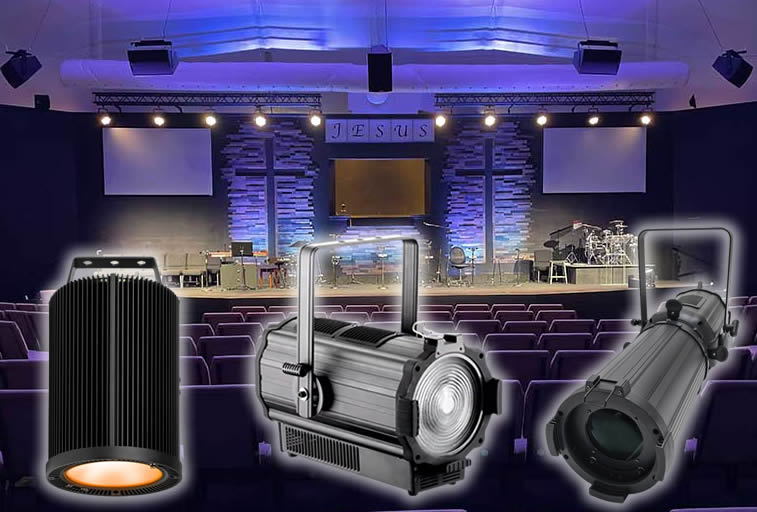
Church Stage Lighting Core Principles: Zones, Layers, and Angles
Before buying any church stage lighting equipment, it’s crucial to plan. A great strategy is to divide your stage into three simple lighting zones:
- Zone 1: Front Lighting: This is the most important part of church stage lighting. It’s your “key light,” illuminating faces and expressions. A solid front wash ensures everyone on stage is clearly visible without harsh shadows.
- Zone 2: Back/Side Lighting: This layer separates the speaker or worship leader from the background, creating depth and a professional, three-dimensional look
- Zone 3: Background/Atmosphere Lighting: Used to illuminate walls, banners, or other scenic elements, this layer sets the overall mood and ambiance of the service.
For a truly professional look, you want to create a “lighting sandwich”: front light for clarity + backlight for depth + background light for atmosphere.
And when placing your front lights, remember the 45/50 degree rule: to eliminate harsh shadows under the eyes and nose, mount your lights high and at a downward angle of about 45/50 degrees from the stage. If you livestream your services, this technique is essential for making your pastor look natural on camera.
Types of Church Stage Lights: Building Your Church Lights Toolkit
Modern professional LED Stage lighting is the undisputed industry standard for churches of all sizes. It’s energy-efficient, generates very little heat, and offers millions of colors at your fingertips, allowing your small team to create professional results without breaking the bank。
Here are the church stage lighting fixtures types you’ll likely encounter:
Fixture Type
LED PAR CAN
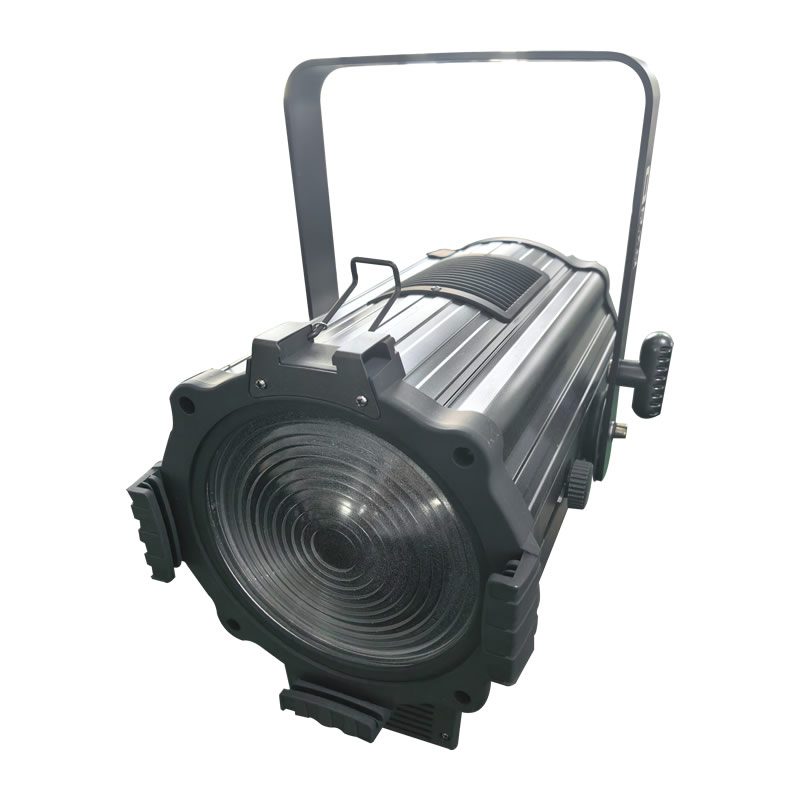
LED Fresnel
LED Profile Spot
LED BAR
Moving Head
Primary Use
General stage washing, creating a broad wash of color or white light across the stage
Soft-edged front lighting, ideal for illuminating faces gently
Highlighting a specific person (pastor, soloist) or object
Uplighting a back wall, creating a colorful cyc wash, or adding sleek, architectural lines to the stage
Adding dynamic effects, colored gobo patterns, or sweeping beams for worship songs
Key Characteristics
Compact, affordable, great for basic coverage.
Produces a soft, wrap-around light with adjustable beam spread (spot to flood).
Produces a sharp, focused beam of light, often with shutters or barn doors to shape the edge.
Long, slim fixtures that provide an even strip of light, great for modern, linear designs.
Highly versatile but more expensive; use them sparingly for a high-impact “wow” factor.
Small Church Stage Lights Budget Breakdown
Your budget will be the biggest factor in determining the size and complexity of your system. Here’s a realistic look at what you can achieve at different price points:
- Basic (Around $2,000): A foundational 4-6 LED Par can setup, and 4 led fresnel lights, basic DMX cables, and a simple DMX controller. This provides a clean stage wash and creates a more focused, professional feel than house lights, eliminating harsh shadows on faces
- Intermediate (3,000−3,000−7,000): Expands to 10-16 fixtures, including dedicated front lights (Fresnels and LED Leko), backlights (LED Pars), and LED bars for the background. Adds a software-based controller for easier scene programming. This setup provides excellent clarity for both the in-room congregation and any livestream cameras.
- Advanced ($10,000+): A comprehensive rig with professional-grade LED fixtures (high CRI for accurate skin tones), like as Fresnel, LED Leko, LED Bar and DMX House Lights, a robust DMX interface, structural rigging (truss/pipe). Often includes a few moving head lights for dynamic effects.
5-Step Action Plan for Your Church
- Step 1: Assess & Plan: Stand on your empty stage and take notes. Where are the shadows? How will front lights be mounted? Sketch your stage and map out the three lighting zones.
- Step 2: Build Your Church Stage Light Shopping List: Prioritize LED fixtures and a DMX controller.
1) Must-Have: 4-6 LED PAR cans for front wash + DMX controller.
2) Next Priority: 2-4 LED Fresnel for backlight + LED bars Fanless for background.
3) Later Upgrades: Moving heads for effects, haze machine (creates soft, focused beams of light). - Step 3: Secure Installation: Prioritize safety! Install safety cables on every fixture. Use professional-grade truss, stands, or beam clamps rated for the weight of your lights, and inspect them regularly
- Step 4: Program for Your Service: Pre-program different “scenes” for various parts of the service (e.g., a brighter, warm white scene for sermons, and a more colorful, toned-down wash for reflective worship songs) to help transitions feel intentional
- Step 5: Train a Team: A simple, repeatable process will empower your volunteers and ensure consistency from week to week, even if operators change
Best Stage Lighting Fixtures for Small Church
For the small church, you only need following stage lighting fixtures for your church stage:
1. Church LED PAR Light or Small LED Fresnel with good price. Like as the mini led fresnel 100 Watt

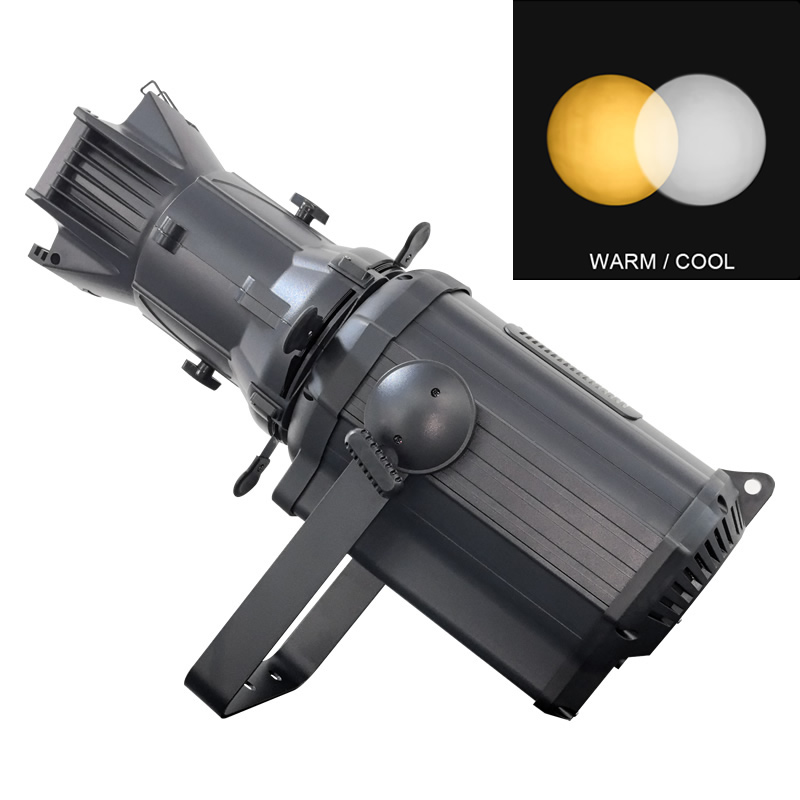
2. 200W LED Ellipsoidal Light
3. 200W Professional LED Fresnel